Publications » Reports or studies » European Steel in Action 2025
European Steel in Action 2025
Downloads and links
Recent updates
EUROFER’s Steel in Action captures a pivotal moment for the European steel sector. As global overcapacity, unfair trade practices, high energy prices, carbon costs and decarbonisation investment challenges converge, the EU has begun to respond - most notably through the new Clean Industrial Deal and the long-awaited Steel and Metals Action Plan. A fast-changing geopolitical and geoeconomic landscape is also redefining Europe’s route to a greener, more resilient and competitive industrial future.
This booklet outlines how Europe’s steel industry - represented and led by EUROFER - is navigating these complex challenges, from trade and energy to climate policy and industrial competitiveness. With a spotlight on the EU’s new policy frameworks, it presents key developments, policy milestones and industry trends impacting the future of EU steel.
Above all, the booklet tracks the progress already made and the urgent steps still needed to make Europe #StrongerWithEUSteel - and avoid the irreversible cost of inaction.
It’s time to act. It’s time to #SaveEUSteel.
The full booklet is available below.

Download this publication or visit associated links
As EU steel production rises, helping preserve up to 80,000 jobs, the industry reports €3.4 billion in investment decisions, with a further €2.4 billion expected by year-end.
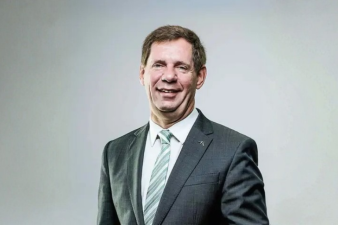
Brussels, 1 October 2026 - The European Steel Association (EUROFER) has elected Geert Van Poelvoorde, Chairman of the Board of ArcelorMittal Europe Steel, as its new President. Taking office today, Mr Van Poelvoorde said stronger home markets across the steel value chain, secure access to export markets and a strong industrial base will be essential to delivering on the European Union’s ambitions for global competitiveness and strategic autonomy.
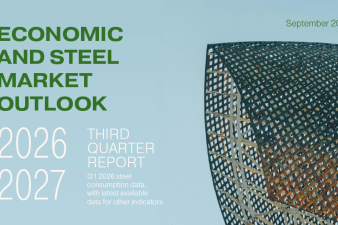
Brussels, 1 October 2026 - Europe’s steel market remains under significant pressure, with exports falling sharply, production at historic lows and demand expected to remain almost flat in 2026, according to the European Steel Association’s (EUROFER) latest Economic and Steel Market Outlook 2026-2027. EU steel exports to third countries fell by 20% in the first half of 2026, with declines across all major export destinations covered by the report. At the same time, crude steel production continued to falter, after reaching a historic low of 125.8 million tonnes in 2025, while apparent steel consumption is forecast to grow by just 0.1% in 2026, before increasing by 2.3% in 2027.
The European Steel Association (EUROFER)
172 Avenue de Cortenbergh
1000 Brussels
Belgium
Email: mail@eurofer.eu
Phone: +32 (0) 2 738 79 20