Publications » Brochures, booklets or fact-sheets » European Steel in Figures 2025
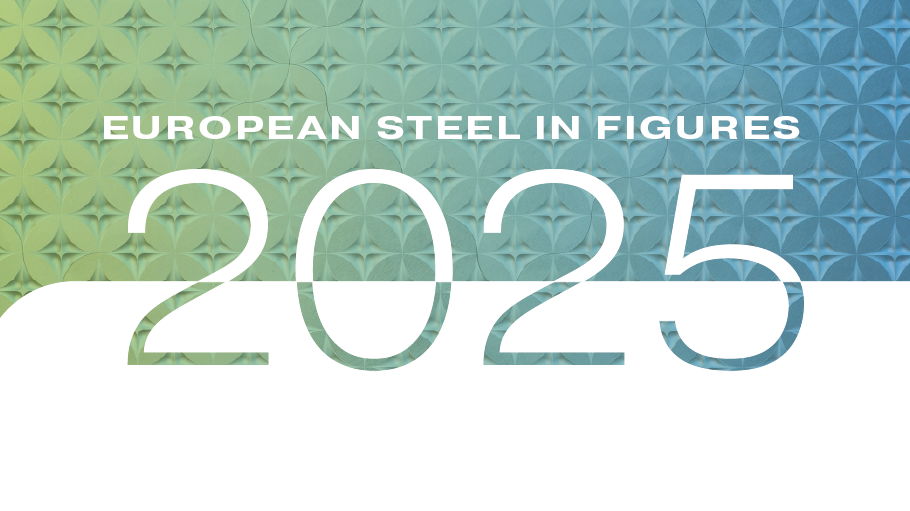
European Steel in Figures 2025
Downloads and links
Recent updates
European Steel in Figures 2025 is the seventeenth edition of the European Steel Association’s (EUROFER) statistical guide, which covers data up to 2024.
It is the fourth edition that takes fully into account the departure of the United Kingdom from the EU and its internal market. All aggregated data for the EU refer exclusively to EU27, and historical datasets have been adapted accordingly.
The numbers presented in the 2025 edition identify the main trends of the past year through data, and reflect the 'perfect storm' hitting the European steel sector - global overcapacity, unfair trade practices, high energy prices, weak demand, economic uncertainty, decarbonisation challenges, geopolitical tensions as well as new and ongoing conflicts.
We hope that our statistics will be of use for those working within and with the steel industry. We also hope that they can help guiding policymakers both at EU and national level in making the right choices when it comes to policy decisions - especially on trade, climate, energy, raw materials - impacting the industry, in particular regarding the implementation of the Steel and Metals Action Plan and the Clean Industrial Deal.
We wish you a fruitful utilisation of European Steel in Figures 2025.
Download this publication or visit associated links
As EU steel production rises, helping preserve up to 80,000 jobs, the industry reports €3.4 billion in investment decisions, with a further €2.4 billion expected by year-end.
Brussels, 1 October 2026 - The European Steel Association (EUROFER) has elected Geert Van Poelvoorde, Chairman of the Board of ArcelorMittal Europe Steel, as its new President. Taking office today, Mr Van Poelvoorde said stronger home markets across the steel value chain, secure access to export markets and a strong industrial base will be essential to delivering on the European Union’s ambitions for global competitiveness and strategic autonomy.
Brussels, 1 October 2026 - Europe’s steel market remains under significant pressure, with exports falling sharply, production at historic lows and demand expected to remain almost flat in 2026, according to the European Steel Association’s (EUROFER) latest Economic and Steel Market Outlook 2026-2027. EU steel exports to third countries fell by 20% in the first half of 2026, with declines across all major export destinations covered by the report. At the same time, crude steel production continued to falter, after reaching a historic low of 125.8 million tonnes in 2025, while apparent steel consumption is forecast to grow by just 0.1% in 2026, before increasing by 2.3% in 2027.
The European Steel Association (EUROFER)
172 Avenue de Cortenbergh
1000 Brussels
Belgium
Email: mail@eurofer.eu
Phone: +32 (0) 2 738 79 20