Climate protection is the focus of much of the European Steel Association's work. Continuing the downward trend in energy use and climate-impacting greenhouse gas emissions is essential to ensuring the sustainability of the European steel sector.
The European steel industry is the most advanced of its kind in the world. As it is, Europe leads the way in environmental and climate performance. CO2 emissions and energy use in European steel production have been halved since 1960, and the sector has the ambition to further achieve cuts of between 80-95% by 2050, compared to 1990 levels.
This transition will require significant investment in new technological development and deployment, in energy infrastructure, consumption and type, and will require access to high-quality
materials, such as iron ore and scrap. EUROFER works on climate and energy issues to establish how this essential change can happen in the sector, ensuring that Europe remains on track to fulfil its Paris Climate Accords requirements, whilst also making European steel fit for a clean, low-carbon future.
Steel industry could see annual carbon costs rise from around €3.4bn in 2026 to €8.2bn in 2031 under the proposed revision of the EU's ETS
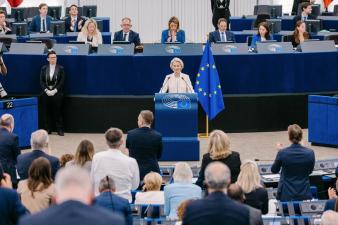
Brussels, 16 September 2026 - Europe’s steel industry has welcomed European Commission President Ursula von der Leyen’s focus on competitiveness, affordable energy and a level playing field, saying these conditions were vital to keep industrial investment and production in Europe.
Ahead of today’s European Parliament vote on the Carbon Border Adjustment Mechanism (CBAM), Europe’s steel industry is calling on MEPs to close remaining loopholes and secure a level playing field for European steelmakers investing billions in low-carbon production.
The European Steel Association (EUROFER)
172 Avenue de Cortenbergh
1000 Brussels
Belgium
Email: mail@eurofer.eu
Phone: +32 (0) 2 738 79 20