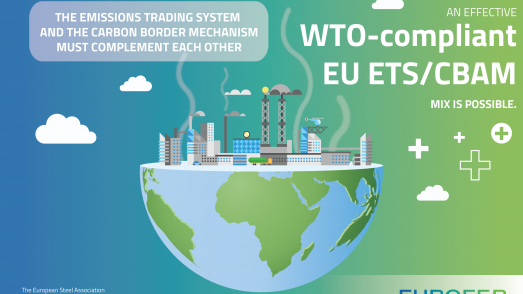
A Carbon Border Adjustment (CBA) mechanism is a tool to support the EU's climate leadership by reflecting the carbon intensity of products imported into the EU, such as steel. This mechanism is important because EU producers have the highest environmental and climate protection goals in the world - and higher production costs that accompany this effort.
The European steel industry is therefore at very high risk of carbon leakage - the loss of sales to cheaply-priced, carbon-intense imports. Avoiding the risk of carbon leakage is a pre-condition for preserving both the environmental integrity of EU climate policy and industrial competitiveness since it contributes to reducing emissions at a global level while maintaining jobs and investments in Europe. This will also be instrumental in facilitating the social acceptance of EU leadership in climate ambition.
The European Green Deal underlines that the risk of carbon leakage can materialise in different forms, 'either because production is transferred from the EU to other countries with lower ambition for emission reduction, or because EU products are replaced by more carbon-intensive imports'. As long as there is no international binding agreement with a global carbon price and equivalent efforts, it is essential that the EU legislation adopts effective measures that avoid all forms of leakage in the short and medium terms.
The carbon border adjustment measure should be applied for a transition period until breakthrough technologies reach sufficient market penetration and CO2-lean products represent a critical mass in the market. It represents a broader contribution to a clean planet, as it is also an effective tool of political diplomacy to foster climate ambition in third countries so that deeper emission reductions are delivered globally.
Ahead of today’s European Parliament vote on the Carbon Border Adjustment Mechanism (CBAM), Europe’s steel industry is calling on MEPs to close remaining loopholes and secure a level playing field for European steelmakers investing billions in low-carbon production.
The signatories call on the European Parliament and Council to ensure an effective and broad extension of the CBAM to relevant steel and aluminium intensive downstream industries.
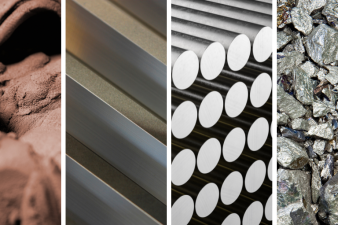
Brussels, 27 November 2025 - The European ceramic, aluminium, ferro-alloys and steel industries express their deep concern about the potential impact of the EU-India FTA on strategic European industries if a sector-specific approach is not adopted and our sectors’ challenges are not duly considered.
The European Steel Association (EUROFER)
172 Avenue de Cortenbergh
1000 Brussels
Belgium
Email: mail@eurofer.eu
Phone: +32 (0) 2 738 79 20