AEGIS Europe is an alliance of European industrial sectors promoting manufacturing, investment, employment, growth and innovation in an environment of fair competition and a level playing field in the EU and abroad. The alliance was created in 2016 to address the critical question as to whether the EU should accept that China was a Market Economy for purpose of anti-dumping policy. Confirming the alliance’s objective, AEGIS Europe sectors increasingly experience the critical need to expand their focus beyond EU trade defence policy and measures dealing with the effects of international economic and trade distortions, towards the root causes of distorted and unfair competition.
Well-designed and enforceable international rules that reflect today’s realities are critical for this purpose. The WTO is the regulatory institution capable of effectively framing and enforcing an international level playing field for the manufacturing industry. AEGIS Europe considers that a rules-based multilateral trade regime benefits all economies. However, the
modernization of the WTO is necessary to address competing economic and political systems.
AEGIS Europe supports the EU ambition to modernize and make the WTO more effective by introducing more transparency, new rules and disciplines and enforcement mechanisms.
Download this publication or visit associated links
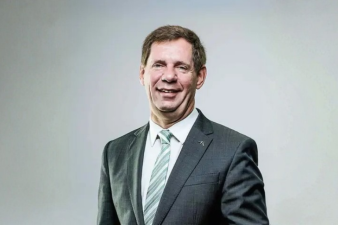
Brussels, 1 October 2026 - The European Steel Association (EUROFER) has elected Geert Van Poelvoorde, Chairman of the Board of ArcelorMittal Europe Steel, as its new President. Taking office today, Mr Van Poelvoorde said stronger home markets across the steel value chain, secure access to export markets and a strong industrial base will be essential to delivering on the European Union’s ambitions for global competitiveness and strategic autonomy.
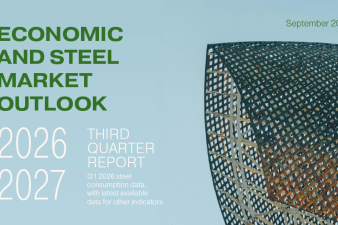
Brussels, 1 October 2026 - Europe’s steel market remains under significant pressure, with exports falling sharply, production at historic lows and demand expected to remain almost flat in 2026, according to the European Steel Association’s (EUROFER) latest Economic and Steel Market Outlook 2026-2027. EU steel exports to third countries fell by 20% in the first half of 2026, with declines across all major export destinations covered by the report. At the same time, crude steel production continued to falter, after reaching a historic low of 125.8 million tonnes in 2025, while apparent steel consumption is forecast to grow by just 0.1% in 2026, before increasing by 2.3% in 2027.
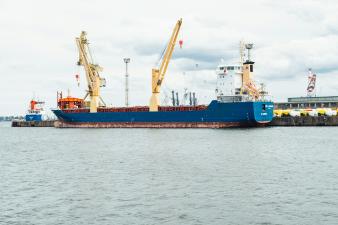
Ship recycling
The European Steel Association (EUROFER)
172 Avenue de Cortenbergh
1000 Brussels
Belgium
Email: mail@eurofer.eu
Phone: +32 (0) 2 738 79 20