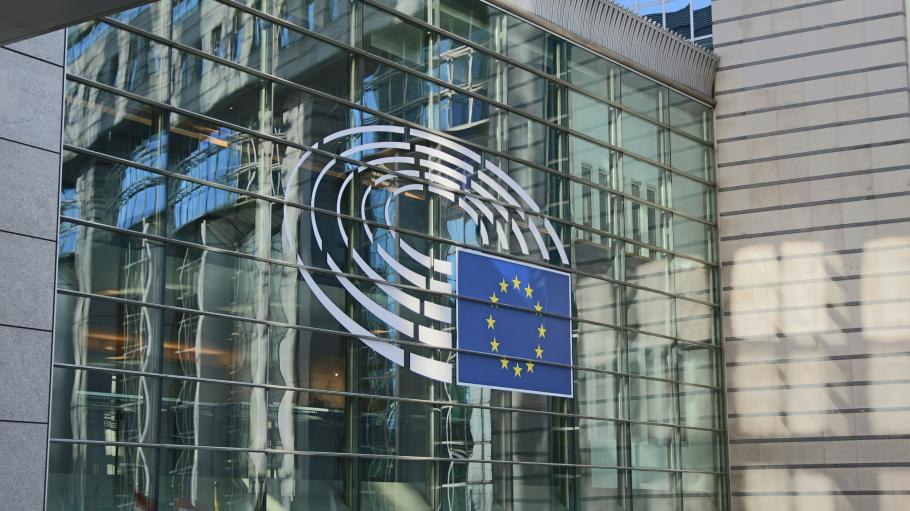
Brussels, 19 November 2026 – Today, the Industry, Research and Energy (ITRE) Committee failed to adopt its opinion on the review of the EU Emissions Trading System (ETS). Europe’s energy-intensive industries (EIIs) express deep disappointment for the missed opportunity to address challenges affecting industrial investments, competitiveness, and jobs in Europe.
What is particularly concerning is not simply the lack of agreement within the EP committee responsible for industrial policy and energy, but the failure to advance concrete solutions to the challenges facing European industry while many industry's concerns had been addressed by amendments tabled by ITRE MEPs and the EU has made restoring industrial competitiveness, bringing investment back and securing the future of its energy-intensive industries a strategic priority.
Europe’s industrial future is at stake here. The current Commission's proposal requires a considered and robust revision. All Members of the European Parliament should urgently focus on this crucial reform and ensure that the whole European Parliament takes a clear position in support of a strong industrial base in Europe. Energy-intensive companies across the continent are suffering from high energy costs, unfair trade practices and geopolitical uncertainty, and need a strong political signal.
Europe’s energy-intensive industries therefore call on the European Parliament to ensure that the ETS review:
Europe’s energy-intensive industries are determined to remain both global leaders in decarbonization and a pillar of Europe’s industrial strength. However, this ambition must be matched by a regulatory framework that makes investment in Europe economically viable. We look forward to working constructively with the European Parliament on a final framework that reflects market and technological realities, enables industrial decarbonisation, protects high-quality jobs and strengthens Europe’s manufacturing competitiveness.
Contact
David French, Spokesperson and Head of Communications, +32 2 738 79 35, (d.french@eurofer.eu)
About the European Steel Association (EUROFER)
EUROFER AISBL is located in Brussels and was founded in 1976. It represents the entirety of steel production in the European Union. EUROFER members are steel companies and national steel federations throughout the EU. The major steel companies and national steel federation of Turkey, Ukraine and the United Kingdom are associate members.
The European Steel Association is recorded in the EU transparency register: 93038071152-83.
About the European steel industry
The European steel industry is a world leader in innovation and environmental sustainability. It has a turnover of around €215 billion and directly employs around 298,000 highly-skilled people, producing on average 146 million tonnes of steel per year. More than 500 steel production sites across 22 EU Member States provide direct and indirect employment to millions more European citizens. Closely integrated with Europe’s manufacturing and construction industries, steel is the backbone for development, growth and employment in Europe.
Steel is the most versatile industrial material in the world. The thousands of different grades and types of steel developed by the industry make the modern world possible. Steel is 100% recyclable and therefore is a fundamental part of the circular economy. As a basic engineering material, steel is also an essential factor in the development and deployment of innovative, CO2-mitigating technologies, improving resource efficiency and fostering sustainable development in Europe.
Brussels, 17 November 2026 – The European Steel Association (EUROFER) welcomes the European Commission’s decision to impose definitive anti-dumping duties on cold-rolled flat steel imports from India, Japan, Taiwan, Türkiye and Vietnam. The decision follows a complaint by EUROFER in 2025 and marks an important step towards restoring fair competition for European steel producers.
Steel in Action 2026
Proposed credit would allow European carmakers to meet 3% of their CO₂ targets through low-carbon steel made in the EU rising to 7.5% from 2035.
Brussels, 21 October 2026 - The European steel industry welcomes a compromise reached in the European Parliament yesterday on CO₂ standards for cars and vans, which includes a dedicated incentive for carmakers to use low-carbon steel Made in the EU.
The European Steel Association (EUROFER)
172 Avenue de Cortenbergh
1000 Brussels
Belgium
Email: mail@eurofer.eu
Phone: +32 (0) 2 738 79 20