News » European Commission decision on SSCR major step forward in countering severe trade distortions
European Commission decision on SSCR major step forward in countering severe trade distortions
Recent updates
Brussels, 16 March 2022 – EUROFER welcomes the publication of the European Commission implementing regulation imposing definitive anti-subsidy measures on imports of stainless steel cold-rolled flat products (SSCR) originating in India and Indonesia. These measures are an important step forward in implementing the EU policy objectives for fair and free trade.
“The European Commission’s decision is a landmark achievement, as it ensures a level playing field for the EU stainless industry, and it is also fundamental in implementing the EU commitments towards sustainable and balanced trade”, said Axel Eggert, Director General of the European Steel Association (EUROFER).
The proceeding was initiated on 17 February 2021, following a complaint submitted by EUROFER. Its conclusions come after significative efforts by both the industry and the Commission to address major raw materials distortions in stainless steel resulting from state interventions in Eastern Asian countries.
These behaviours have granted undue competitive advantages to exporting producers on the EU market and created massive non-market overcapacities. At the same time, it should also be highlighted that the Sino-Indonesian capacities - 100% export-oriented - are relying on production processes which result in CO2 emissions that are around four times higher than Europe’s low carbon stainless steel production.
The Commission’s measures also consolidate the new course of the EU trade action in addressing China’s behaviour by tackling the support it grants to domestic companies along the Belt and Road Initiative. The Indonesian stainless steel industry is a prime example of the export of Chinese capacities to other countries: Indonesia went from zero stainless steel production in 2017 to the second worldwide capacities in 2022. Similar extensions of capacities have also occurred in India.
“Given the linkages between Indian and Indonesian exporting companies, it is essential that the European Commission remains vigilant with regard to any attempts to circumvent or absorb these measures", concluded Mr Eggert.
As EU steel production rises, helping preserve up to 80,000 jobs, the industry reports €3.4 billion in investment decisions, with a further €2.4 billion expected by year-end.
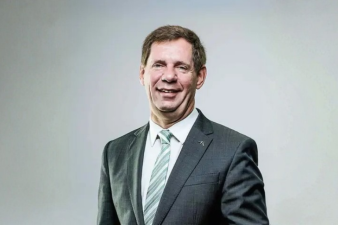
Brussels, 1 October 2026 - The European Steel Association (EUROFER) has elected Geert Van Poelvoorde, Chairman of the Board of ArcelorMittal Europe Steel, as its new President. Taking office today, Mr Van Poelvoorde said stronger home markets across the steel value chain, secure access to export markets and a strong industrial base will be essential to delivering on the European Union’s ambitions for global competitiveness and strategic autonomy.
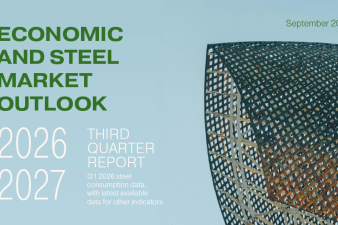
Brussels, 1 October 2026 - Europe’s steel market remains under significant pressure, with exports falling sharply, production at historic lows and demand expected to remain almost flat in 2026, according to the European Steel Association’s (EUROFER) latest Economic and Steel Market Outlook 2026-2027. EU steel exports to third countries fell by 20% in the first half of 2026, with declines across all major export destinations covered by the report. At the same time, crude steel production continued to falter, after reaching a historic low of 125.8 million tonnes in 2025, while apparent steel consumption is forecast to grow by just 0.1% in 2026, before increasing by 2.3% in 2027.
The European Steel Association (EUROFER)
172 Avenue de Cortenbergh
1000 Brussels
Belgium
Email: mail@eurofer.eu
Phone: +32 (0) 2 738 79 20