Publications » Brochures, booklets or fact-sheets » Quality Tracking System for Steel Coils
Quality Tracking System for Steel Coils
Downloads and links
Recent updates
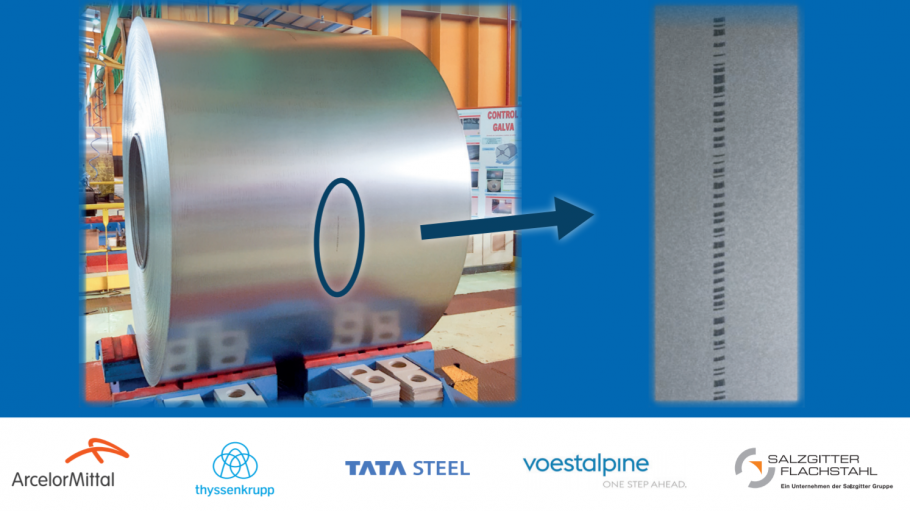
Flat steel products, such as sheets, are often delivered to customers as coils. Coils are easier to transport as several hundred metres of steel can be shipped in a relatively compact load. However, steel coils can have isolated quality issues – imperfections – at points along their length. These isolated flaws can disrupt customers’ processes as finished parts containing the imperfections may be rejected during quality control.
As early as the 1990s, steel coil users began expressing their interest in an information tracking mechanism capable of tracing these imperfections. Steel producers have worked together since then to develop a technology that can track coil information with a high degree of precision. This technology is called the Quality Tracking System. The main function of the Quality Tracking System is that it can provide additional information about the coil without requiring changes to any quality standards.
In addition, the Quality Tracking System can also be an enabler for companies that are looking to transition to Industry 4.0.
Download this publication or visit associated links
As EU steel production rises, helping preserve up to 80,000 jobs, the industry reports €3.4 billion in investment decisions, with a further €2.4 billion expected by year-end.
Brussels, 1 October 2026 - The European Steel Association (EUROFER) has elected Geert Van Poelvoorde, Chairman of the Board of ArcelorMittal Europe Steel, as its new President. Taking office today, Mr Van Poelvoorde said stronger home markets across the steel value chain, secure access to export markets and a strong industrial base will be essential to delivering on the European Union’s ambitions for global competitiveness and strategic autonomy.
Brussels, 1 October 2026 - Europe’s steel market remains under significant pressure, with exports falling sharply, production at historic lows and demand expected to remain almost flat in 2026, according to the European Steel Association’s (EUROFER) latest Economic and Steel Market Outlook 2026-2027. EU steel exports to third countries fell by 20% in the first half of 2026, with declines across all major export destinations covered by the report. At the same time, crude steel production continued to falter, after reaching a historic low of 125.8 million tonnes in 2025, while apparent steel consumption is forecast to grow by just 0.1% in 2026, before increasing by 2.3% in 2027.

The European Steel Association (EUROFER)
172 Avenue de Cortenbergh
1000 Brussels
Belgium
Email: mail@eurofer.eu
Phone: +32 (0) 2 738 79 20